
Midwest D-CFAR announces 2026 pilot funding awardees
The Midwest D-CFAR is proud to announce the investigators selected to receive 2026 research pilot awards. These awards aim to support researchers new to HIV or expanding their focus to HIV-related studies. Designed to generate preliminary data for competitive funding applications, these awards support new investigators, those transitioning to HIV research, and those pursuing their first R or K awards.
We received a broad pool of applications featuring research projects across public health, implementation science, basic science, and clinical research from researchers in a range of disciplines, including medicine, social work, and public health. This highlights an increasing focus on interdisciplinary research and a commitment to translating findings into real-world impact that we are happy to support.
Below is a brief description of the groundbreaking projects funded through this initiative this year.
Investigator Pilot Awardees
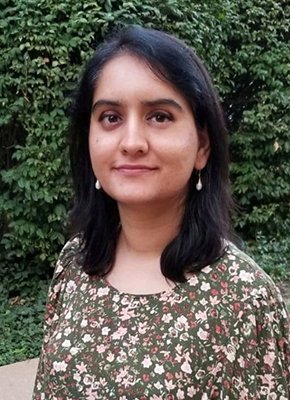
Pallavi Chandra, PhD
Project: Investigating Immune Dysfunction during HIV/TB Co-infection using a Humanized Mouse Model
Principal investigator: Pallavi Chandra, PhD - Research Assistant Professor, WashU
Summary: This project investigates why people with HIV remain highly vulnerable to tuberculosis despite anti-retroviral therapy. Using a humanized mouse model, we will examine how HIV alters lung macrophage function, immune cell communication, and cellular metabolism to identify mechanisms driving impaired TB control.
Project: Turning HIV’s Rapid Evolution Into Its Achilles Heel
Principal investigator: Priya Pal, MD, PhD - Instructor in Medicine, WashU
Summary: HIV treatment has come a long way. Thanks to modern medicines called antiretroviral therapy, HIV is no longer the fatal disease it once was. Today, people with HIV can often live long, healthy lives. Still, there is no cure, and finding one remains a major scientific challenge. In this study, we will explore how the innate immune system is able to block replication of a subset of HIV viruses, X4 tropic virus.

Priya Pal, MD, PhD

Kevin Xu, MD, MPH
Project: Moving Beyond “Non-Adherence”: Employing A Cyclical Framework to understand HIV Care Trajectories After Syphilis Diagnosis Among People with Substance Use Disorders
Principal investigator: Kevin Xu, MD, MPH - Assistant Professor of Psychiatry, WashU
Summary: Syphilis cases are rising in the US, especially among people who use drugs, yet data on timely HIV testing or ongoing care are limited. Using national insurance data from 33,000 people, we will assess HIV testing, prevention, and treatment patterns and how substance use and psychiatric disorders shape them. Our goal is to reframe “non-adherence” as cyclical engagement and identify where supportive re-engagement can improve outcomes.
Partner Pilot Awardees
Partner Pilot Awards support investigator pairs, with one person from an academic institution and the other from a community-based organization or public health agency.
Project: Bridging the Gap: Testing a Brief, Community-Led Intervention to Advance HIV Prevention and Testing among Reentry Populations
Principal investigators: Devin Banks, PhD - Assistant Professor, WashU, and Reginald Smith, CADC - Founder, Pure Living Recovery and Rehabilitation
Summary: Many people leaving prison face high risks for HIV infection and transmission but do not get tested for HIV. This project evaluates whether a brief, 3-minute educational session for people recently released from prison can encourage them to get tested. We will also examine barriers to HIV testing like HIV misconceptions to better tailor the educational session. Our goal is to increase HIV testing and knowledge for those re-entering the community.

Devin Banks, PhD (left) and Reginald Smith, CADC (right)

Nathanial Nolan, MD, MPH, MPHE (left) and Theresa Anasti, PhD, MSW (right)
Project: St. Louis Sex Workers Accessing PrEP -- the STL SWAP study
Principal investigators: Nathanial Nolan, MD, MPH, MPHE - Executive Director, StreetMed STL, and Theresa Anasti, PhD, MSW - Assistant Professor, WashU
Summary: This project seeks to understand barriers and facilitators to uptake of pre-exposure prophylaxis for HIV (PrEP) among people who engage in sex work in St. Louis. By partnering with mutual aid organizations, this project seeks to interview individuals engaged in sex work to better understand how to improve PrEP uptake in this population with the goal of designing low-barrier pathways to accessing PrEP.
Special thanks to all who supported these awards, including: the NIH, NIAID, and Saint Louis University.
Written by Kate Gershwin.