
Rethink, Rebuild, Rise: Bringing Global HIV Innovation, Women’s Leadership, and Community Power Home from AIDS 2026
August 17, 2026
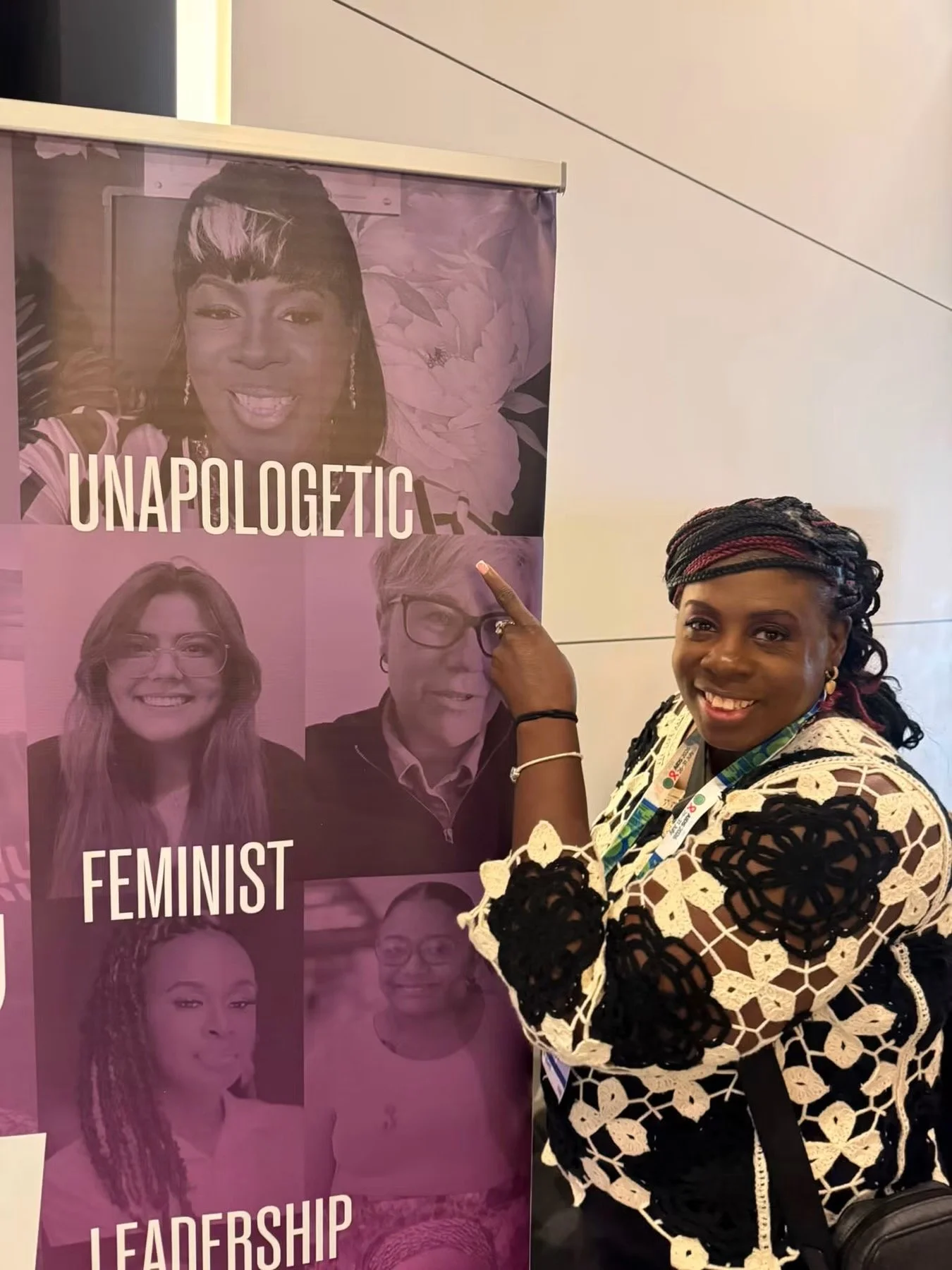
A Global Call to Rethink, Rebuild and Rise
From July 26–31, 2026, the global HIV community gathered in Rio de Janeiro, Brazil, for AIDS 2026, the 26th International AIDS Conference, under the powerful theme “Rethink, Rebuild, Rise.”
Representing the United States and participating as a delegate connected to the Midwest D-CFAR, International Community of Women Living with HIV North America (ICWNA), and the International Steering Committee (ISC), I had the opportunity to experience firsthand the energy, innovation, advocacy, and community leadership shaping the future of the global HIV response.
For me, AIDS 2026 was more than a conference. It was an opportunity to listen, learn, build relationships, exchange ideas, and identify innovations that can help strengthen HIV programming and community engagement in the United States, particularly across the Midwest. The conference theme, Rethink, Rebuild, Rise, challenged us to consider what the future of the HIV response must look like during a period of changing funding environments, shrinking civic space, growing anti-rights backlash, and rapid technological change.
One message was clear throughout the conference: Communities remain at the center of the HIV response.
Women Know What Works: Centering Women Living with HIV
One of the most meaningful spaces during AIDS 2026 was the “Women Know What Works” programming, which brought together women living with HIV, advocates, researchers, and global experts to address the realities affecting women living with HIV around the world, including criminalization, stigma, human rights, sexual and reproductive health (SRHR), and access to care.
The conversations reinforced an important principle: women living with HIV are not simply recipients of HIV services—they are leaders, experts, advocates, researchers, organizers, and innovators who must be meaningfully involved in shaping the policies and programs designed to serve their communities.
The discussions also connected directly to the broader AIDS 2026 focus on SRHR/HIV integration and community leadership in a new funding era. As funding priorities evolve, the global response must continue to invest in community-led approaches that integrate HIV services with sexual and reproductive health and rights.
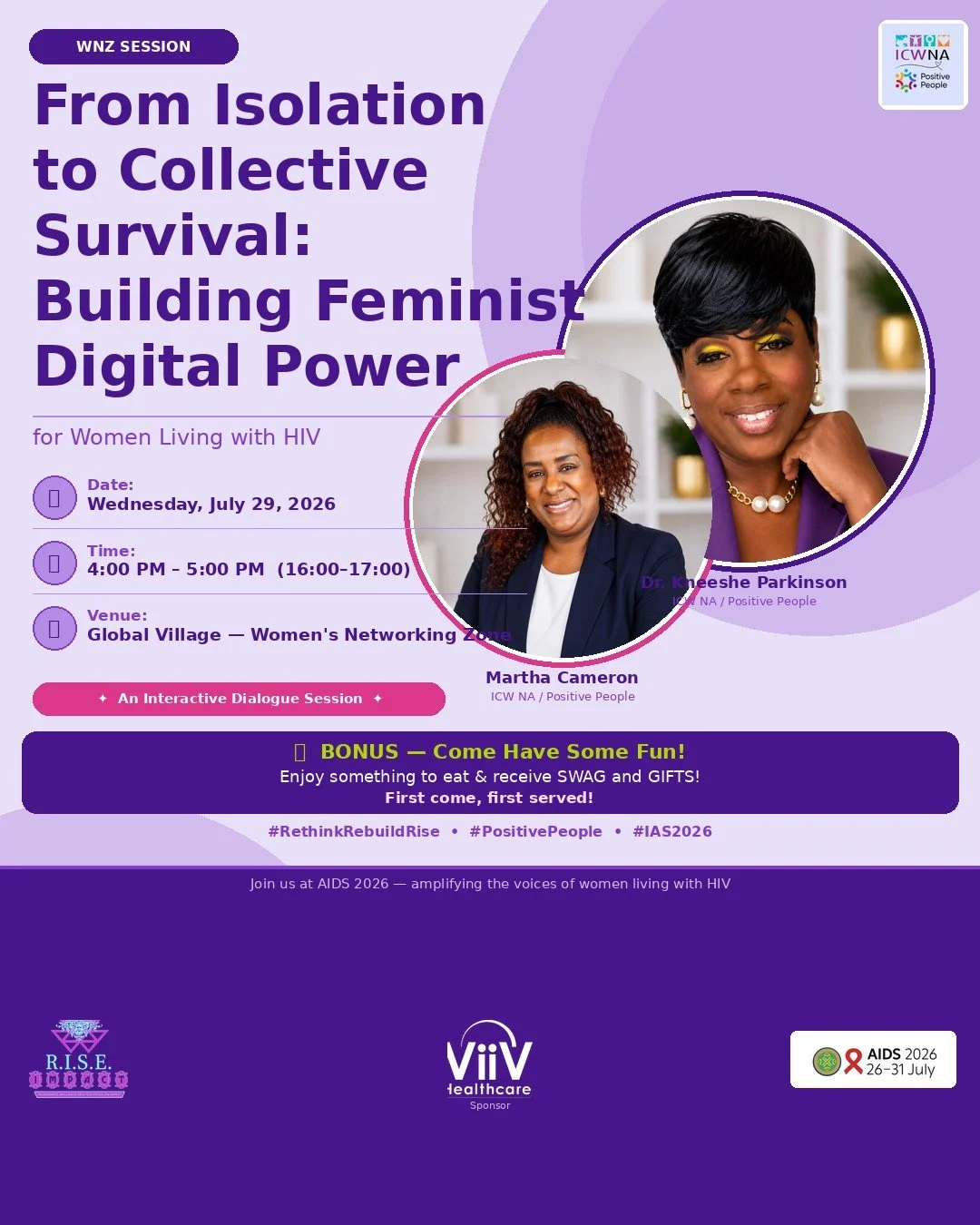
From Isolation to Collective Survival: Building Feminist Digital Power
On Wednesday, July 29, at the Global Village – Women’s Networking Zone, ICW North America presented an interactive dialogue session titled: “From Isolation to Collective Survival: Building Feminist Digital Power for Women Living with HIV.” The session was facilitated by myself, as Co-Chair of ICW North America, as well as Martha Cameron, Executive Director of ICW North America.
The conversation explored how peer-led digital communities can reduce stigma, strengthen connection, build collective power, and create opportunities for women and marginalized communities living with and affected by HIV to remain connected, even during periods of shrinking civic space and increasing anti-rights rhetoric.
The session also created an opportunity to reflect on the growing role of digital engagement among women living with HIV across the United States and North America; digital spaces can become much more than communication platforms. When intentionally designed and community-led, they can become spaces for peer support, advocacy, leadership development, education, storytelling, mobilization, and collective survival.
The conversation reminded us that while isolation can be a barrier to health and wellbeing, connection is a source of power.
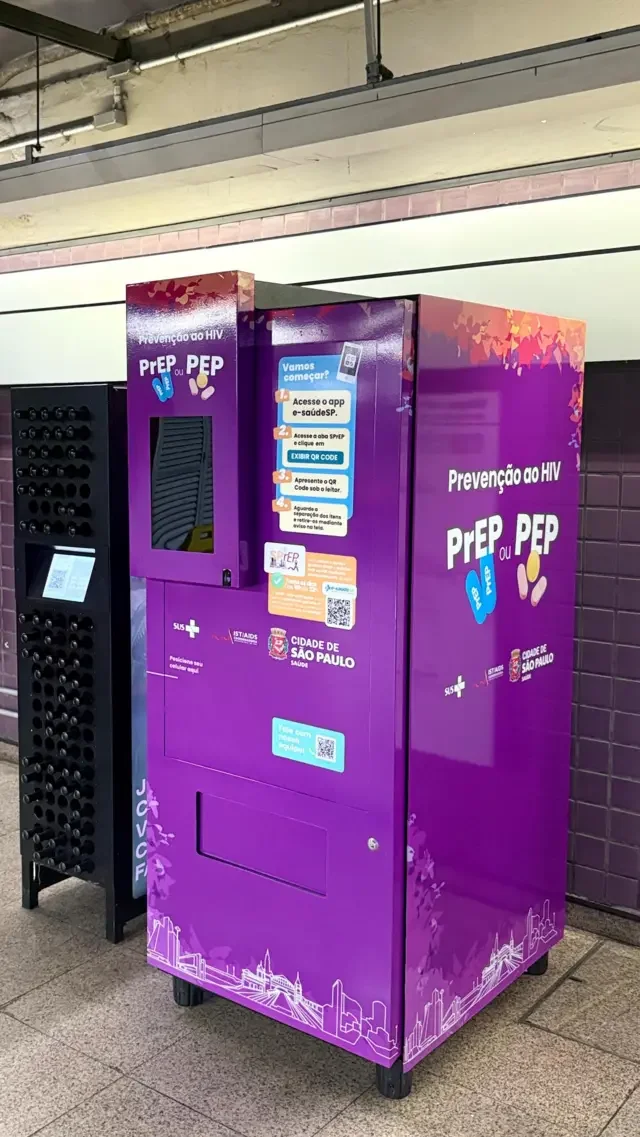
São Paulo’s HIV prevention vending machine. Photo credit: BBC News Brasil.
Innovation in Action: HIV Prevention in a Vending Machine
Another powerful takeaway from AIDS 2026 was seeing how HIV prevention is being brought directly into everyday environments. In São Paulo, automated vending machines have been implemented to provide access to PrEP, PEP, and HIV self-testing, connected to the city's “SPrEP” online platform. Individuals can complete a teleconsultation and receive a QR code that allows them to access prevention supplies through the machines.
The model demonstrates how technology can help remove some of the traditional barriers associated with HIV prevention, including transportation, clinic hours, stigma, and the need to navigate multiple points of care. The innovation is particularly striking because of its simplicity: Make prevention easier to reach, and more people can access it.
The São Paulo model has already demonstrated significant use, with more than 1,000 distributions recorded during the first five months of the automated-machine initiative. At the AIDS 2026 exhibition hall, attendees could see a simulation of this type of prevention vending machine and learn more about how technology, telehealth, and community-centered design can work together.
The concept sparked an important question for the United States: What could HIV prevention look like if people could access PrEP, PEP, and HIV self-testing in more of the places where they already live, work, travel, and gather? That is the kind of innovation that deserves to be explored—not simply admired internationally but thoughtfully considered for adaptation within U.S. communities.
As Karl Schmid emphasized in discussing the innovation, “the easier we make it for people to protect themselves,” the more we can support people in taking control of their sexual health and HIV prevention.
HIV Treatment at a Crossroads
Another important AIDS 2026 conversation examined “HIV treatment at a crossroads: Community power in the age of austerity and algorithms.”
The session explored structural barriers to HIV treatment and prevention and the real-world consequences when people are excluded from services, technology, or decision-making processes. It also highlighted the importance of understanding how artificial intelligence and emerging technologies are entering the HIV response. Technology cannot replace community. Instead, technology must be designed with communities.
This principle has direct relevance for the Midwest D-CFAR and its Scientific Working Group Community Collaborative. As we continue to explore dissemination, implementation, community engagement, and innovative approaches to addressing social determinants of health, we must ensure that community knowledge remains a central component of innovation.
Rethinking the Future of HIV Service Delivery
The conference also provided an opportunity to hear conversations about the future of global health assistance, including “Transforming health assistance: Implementing U.S. government MOUs for sustainable HIV programs,” which examined the “America First” Global Health Strategy and the implementation of U.S. Government memoranda of understanding, implementation plans, and governance structures.
For community organizations and HIV leaders in the United States, these conversations matter. Funding changes are not simply administrative issues. They can directly affect the programs, staff, partnerships, services, and communities that depend on sustained HIV infrastructure. This makes community leadership more important than ever.
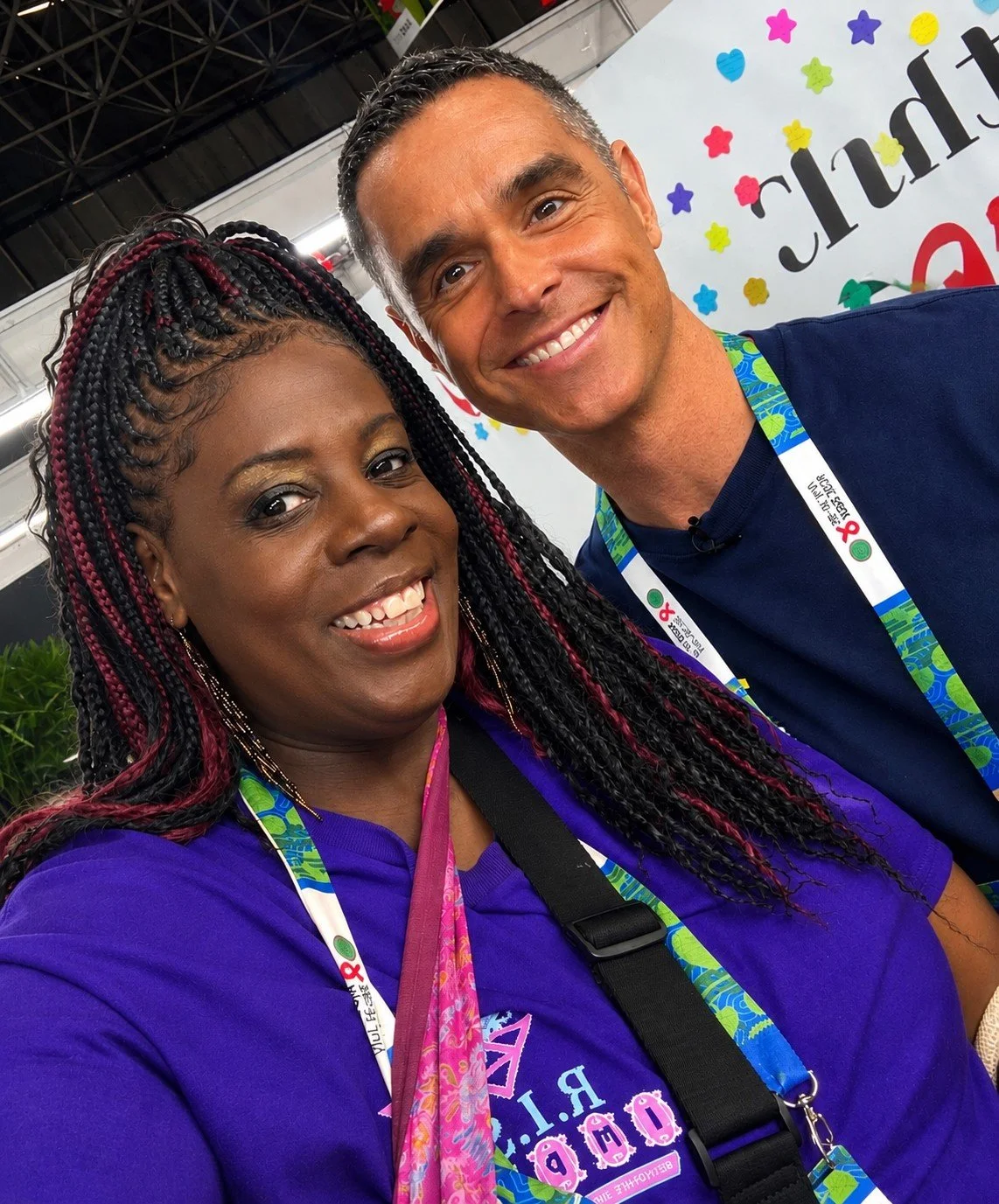
Kneeshe and Karl Schmid pose for a photo at AIDS 2026.
Bringing the Lessons Home to the Midwest
My participation at AIDS 2026 reinforced the importance of bringing international learning back home. The Midwest has an opportunity to learn from global models while also recognizing the unique needs of its own communities—including rural communities, Black-led organizations, women, people experiencing housing instability, people affected by substance use, and communities that continue to experience barriers to HIV prevention and care.
The lessons from Rio are therefore not limited to Rio. They belong in our community conversations, our research partnerships, our grant development, our implementation strategies, our HIV prevention programs, and our work to build stronger relationships between academia and community. The question is no longer simply, “What did we learn?” The more important question is: “What will we do differently because we learned it?”
A powerful moment was hearing Oni Blackstock reflect on the story of Robert Rayford, a young Black teenager from St. Louis whose 1969 death is widely recognized as the earliest documented case of HIV in North America. His story reminds us that the history of HIV cannot be separated from racism, stigma, and the inequities that shape who receives care, whose stories are believed, and whose lives are remembered.
Robert Rayford’s story challenges us to confront the enduring impact of racism in medicine and public health—and to ensure that communities most affected by HIV are not only included in the conversation but are the ones leading it.
Rethink. Rebuild. Rise.
Returning from Brazil, I carry more than photographs and memories. I return with new relationships, new ideas, new questions, new innovations, and renewed commitment to community.
AIDS 2026 demonstrated that the future of HIV prevention and care will require us to embrace innovation without losing sight of humanity; use technology without replacing lived experience; strengthen systems without silencing community; and develop solutions that are accessible to the people who need them most.
From feminist digital communities to HIV prevention vending machines, from women-led advocacy to community-powered research, the message from Rio was unmistakable: The future of HIV is community-led.
And as we return home to continue the work, we have an opportunity to take what we learned, adapt it to our communities, and help move the HIV response forward. The work continues.
Written by Kneeshe Parkinson, MHA, Hon. PhD
USA Delegate | Midwest D-CFAR | International Community of Women Living with HIV North America (ICWNA) | International Steering Committee (ISC)