
October 20, 2026
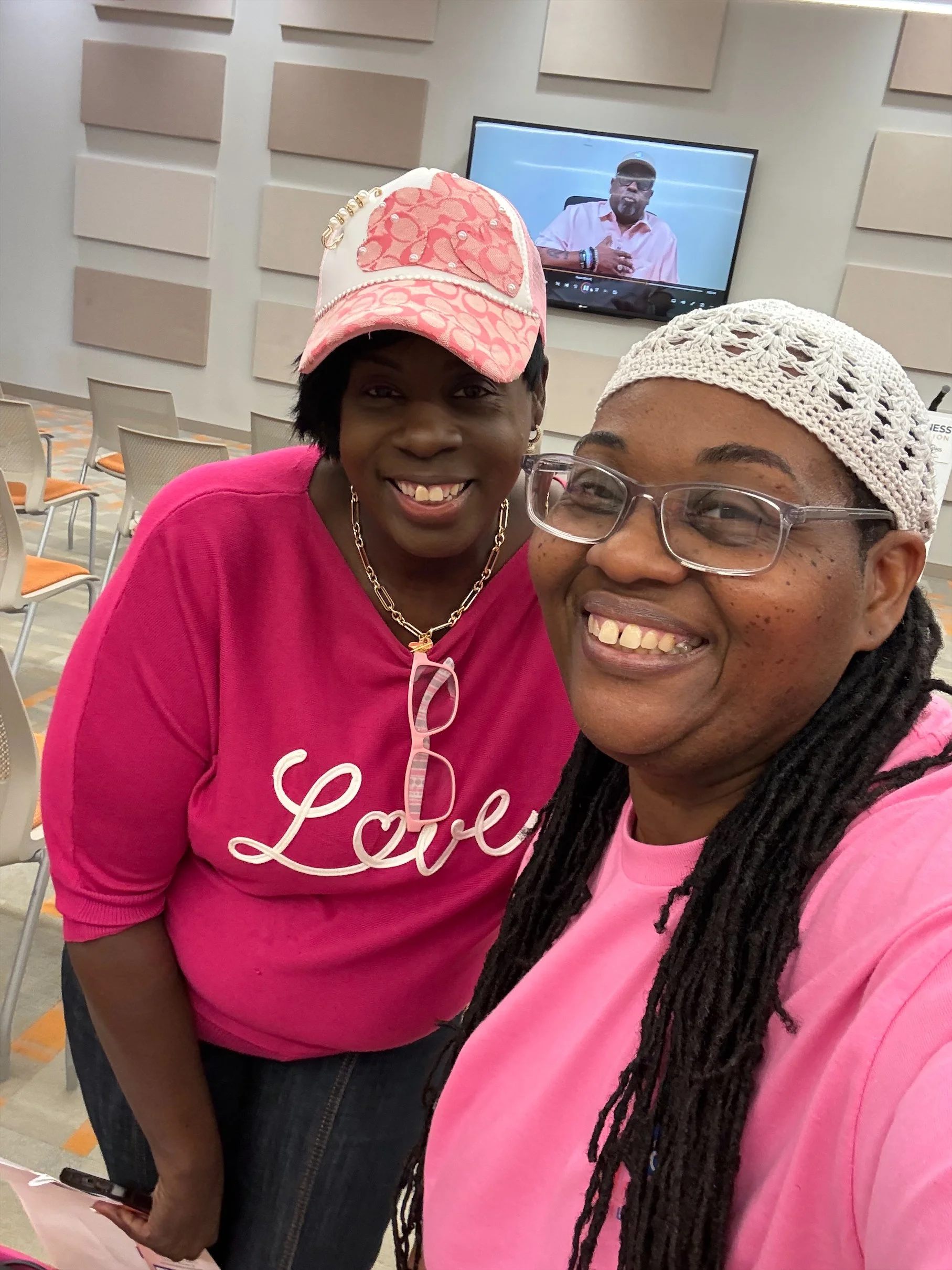
Kneeshe Parkinson (left) and Aja La'Starr Owens (right) from the Community Health Commission of Missouri.
October is Breast Cancer Awareness Month in the U.S. This year, Kneeshe Parkinson, Program Coordinator for the Midwest D-CFAR Scientific Working Group (SWG) Community Collaborative, was invited to attend Beyond the Ribbon, a Breast Cancer Awareness event hosted by the Community Health Commission of Missouri, a valued community partner. Held at the Deaconess Foundation in St. Louis, Missouri, the event brought together breast cancer survivors, community-based organizations, advocates, and those committed to advancing awareness, education, and support for people affected by breast cancer.
The gathering provided a meaningful opportunity to hear firsthand accounts from individuals who have navigated the breast cancer journey and emerged as advocates for awareness, education, and survivorship. Their stories reflected resilience, hope, and the importance of access to reliable information, supportive services, and a community that understands the challenges that can extend beyond diagnosis and treatment.
Understanding the Landscape of Breast Cancer
Breast cancer remains a significant public health concern. According to the Centers for Disease Control and Prevention (CDC), breast cancer is the second most common cancer among women in the United States, and the second leading cause of cancer mortality among women in the United States. For non-Hispanic Black women and Hispanic women, breast cancer is the leading cause of cancer mortality. Source: CDC, U.S. Cancer Statistics.
Missouri faces similar challenges. In 2024, the age-adjusted breast cancer mortality rate among females was 19.4 deaths per 100,000 in Missouri, compared with 18.7 per 100,000 nationally. Source: Healthy People 2030, Missouri State Profile.
Behind every statistic is a person, a family, and a community affected by breast cancer. Although advances in screening, diagnosis, and treatment have improved care, barriers to accessing resources and support remain. Financial challenges, transportation limitations, and difficulties navigating health and social service systems can complicate an already challenging experience. Addressing these challenges requires more than awareness alone; it calls for sustained education, accessible community resources, supportive partnerships, and continued efforts to ensure that individuals and families can find the information and services they need.
Community Organizations Making a Difference
Throughout Beyond the Ribbon, local community-based organizations shared information about their missions, services, and commitment to supporting individuals affected by breast cancer. Their participation highlighted the essential role community organizations play in helping people navigate the practical, emotional, and social challenges associated with a cancer diagnosis. Organizations provide financial assistance, transportation to appointments, survivorship programs, and survivorship bootcamps designed to help individuals access information, build connections, and navigate life during and after treatment.
These services demonstrate that effective cancer support extends beyond the clinical setting; when individuals can connect with trusted organizations, ask questions in a welcoming environment, and learn about available resources, they are better positioned to make informed decisions and seek the support they need.
Where Research and Community Partnerships Meet
For Kneeshe, attending Beyond the Ribbon was an opportunity to experience firsthand how community engagement, research, and strategic partnerships can work together to advance health equity and improve health outcomes for people affected by breast cancer.
Through the Midwest D-CFAR SWG Community Collaborative, Kneeshe helps foster connections among academic researchers, community-based organizations, public health professionals, and other stakeholders. The Collaborative supports partnerships that bring community perspectives into research, encourage meaningful collaboration, and help ensure that research priorities reflect the needs and experiences of the people most affected.
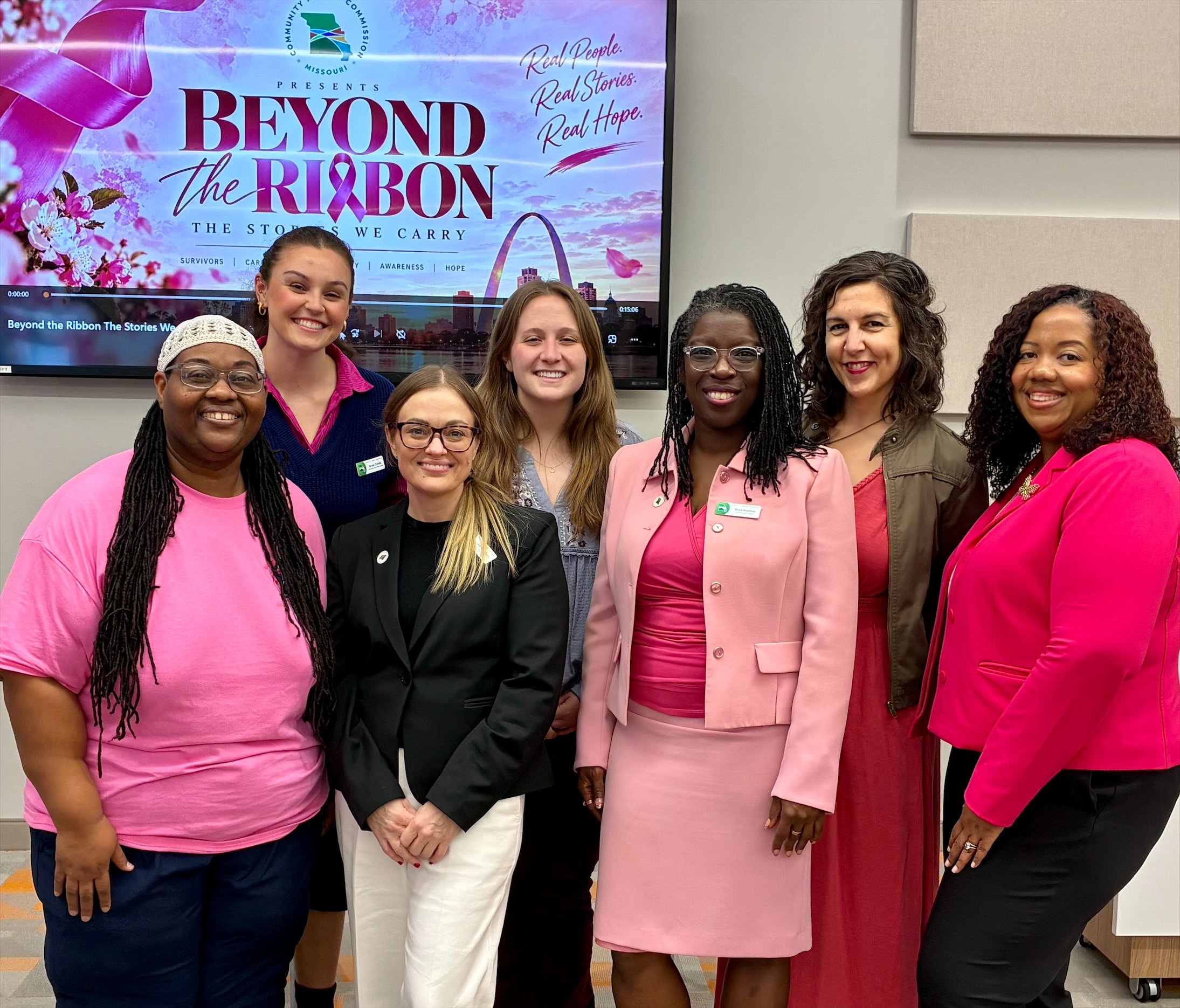
The Community Health Commission of Missouri team at the Beyond the Ribbon event.
While the Collaborative focuses primarily on HIV-related research, its commitment to community-centered engagement reflects a broader principle: meaningful health research is strengthened when researchers and communities work together.
Events such as Beyond the Ribbon provide valuable opportunities to establish new relationships, strengthen existing partnerships, exchange resources, and learn directly from individuals with lived experience. They also demonstrate the importance of creating safe, welcoming spaces where people can share their stories, ask questions, celebrate milestones, and build networks of support without fear of judgment.
The afternoon combined meaningful conversations with opportunities to connect, learn, and experience the sense of community that emerged throughout the gathering. These interactions reinforced an important lesson: partnership building does not happen only in research meetings or academic settings. It also happens when people come together around shared experiences, common goals, and a commitment to helping others.
A Survivor’s Perspective: Turning Awareness Into Action
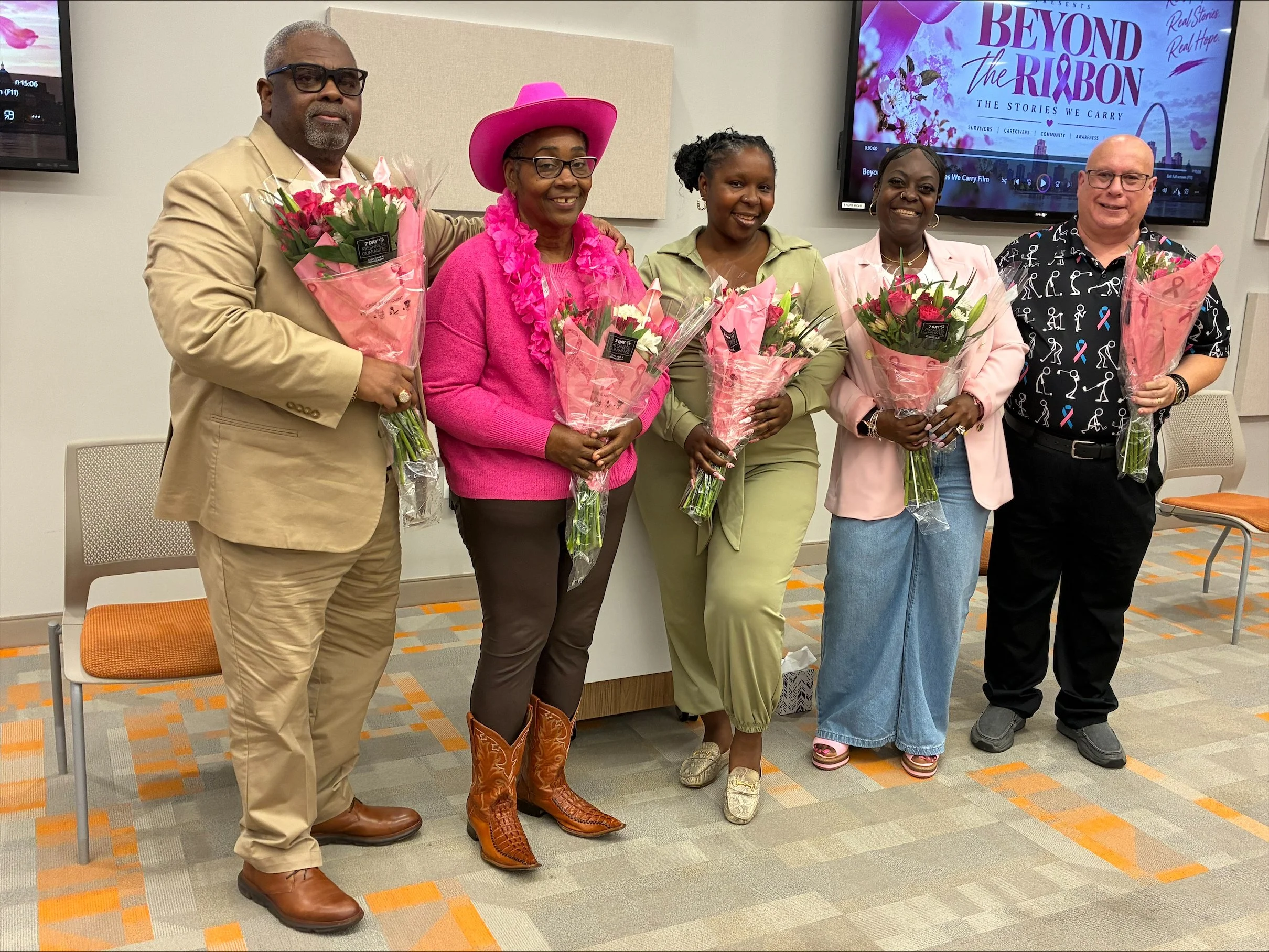
Survivors recognized at Beyond the Ribbon event. From left to right: Dennis DeShay, Deloris Owens, StarR Logan, Parish Gordon-Fernandez, and Tommy Wright.
At the heart of Beyond the Ribbon were the voices of breast cancer survivors whose personal reflections brought the importance of awareness, education, and community support into focus.
StarR Logan, a survivor who was diagnosed at age 25, shared: “Being able to share my story, [even] if it’s just to one person, can save a life.” Logan’s words highlight why opportunities for survivors to speak openly about their experiences matter. Personal stories can make awareness more relatable, help reduce feelings of isolation, and encourage others to become more informed and engaged in their health.
Deloris Owens, a two-time breast cancer survivor, reflected on the event and the gratitude she feels for being able to share her journey: “The event was awesome. Everyone story is different. I’m grateful to be alive to tell my story.” Each person's journey is unique. Creating opportunities for survivors to share these experiences allows their voices to be heard and their journeys to be acknowledged and celebrated.
Parish Fernandez, a three-year survivor, also shared how the event reinforced the importance of awareness, education, and community support: “As a three-year breast cancer survivor, this event meant so much to me because it reminded me that awareness, education, and community support can make a lasting impact. Every survivor has a story, and every story has the power to inspire hope, encourage someone to get screened, and remind those facing a diagnosis that they are not alone. Coming together as a community allows us to share our experiences, uplift one another, and turn awareness into action. My prayer is that we continue creating spaces where survivors feel seen, heard, supported, and celebrated. Together, we are stronger! ”
Together, the reflections shared by Logan, Owens, and Fernandez illustrate the importance of making room for survivor voices in conversations about breast cancer. Their experiences remind us that survivorship is not defined by a single story or milestone. It is a deeply personal journey that deserves recognition, understanding, and ongoing support. Additionally, when survivors are given the opportunity to speak and others are willing to listen, their experiences can help inspire action, strengthen relationships, and foster a greater sense of connection.
Continuing the Conversation
Breast Cancer Awareness Month provides an important opportunity to elevate education and outreach, but the work must continue throughout the year. Communities need ongoing access to trusted information, appropriate screening resources, supportive services, and opportunities to connect with others who understand their experiences.
The Beyond the Ribbon event reinforced the importance of listening to lived experiences, recognizing the contributions of community-based organizations, and building relationships that can lead to meaningful change.
For the Midwest D-CFAR SWG Community Collaborative, participation in community events like Beyond the Ribbon is an opportunity to strengthen relationships, learn from partner organizations, and continue advancing a culture of research collaboration in which community voices matter. Awareness opens the door. Education empowers individuals. Partnership strengthens communities. And together, we can turn meaningful connections into lasting action.
The conversation around breast cancer does not end in October. It continues every time we listen, share resources, support survivors, and work together to build healthier, more connected communities.
Written by Kneeshe Parkinson.