
Joining a Community of Support: Arnezsia’s Internship Journey
September 22, 2026
Written by Arnezsia Kimbrough, edited by Kate Gershwin
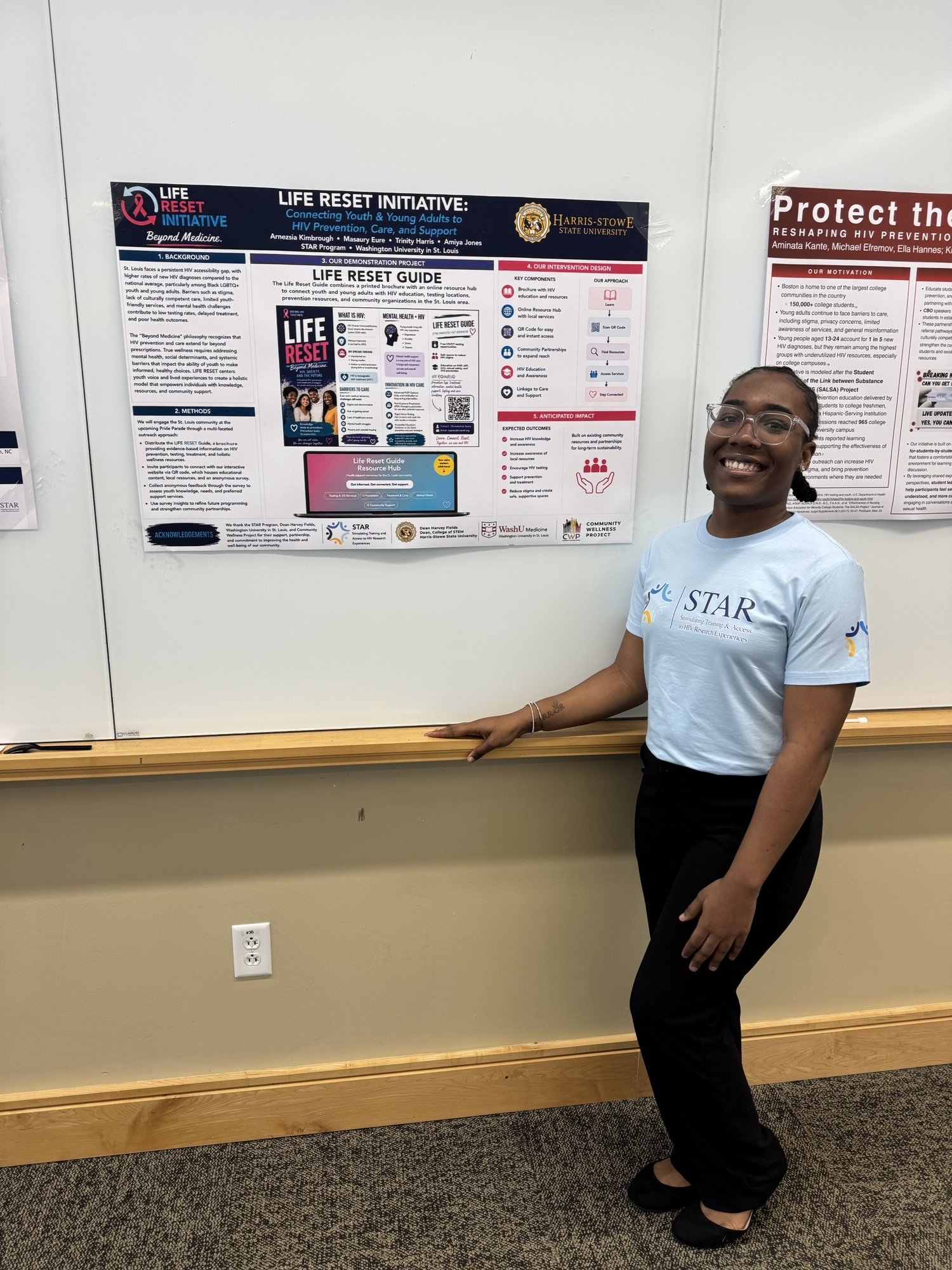
Arnezsia presenting her STAR team’s internship deliverable.
Hello! My name is Arnezsia Kimbrough. This Spring, I had the opportunity to participate in the Stimulating Training and Access to HIV Research Experiences (STAR) program and work with the Community Wellness Project (CWP) as part of the Harris Stowe State University (HSSU)-St. Louis Department of Health (STLDOH)-STAR-Midwest D-CFAR internship program, an experience that expanded my perspective and brought me into an incredible community of support.
When I first joined the STAR Program, I was excited to gain experience outside of the traditional laboratory setting and learn more about HIV prevention, treatment, and community health. At the time, I was completing my Bachelor of Science in Biology at Harris-Stowe State University, so much of my academic experience had focused on the basic side of health and disease. Through STAR and my work with the CWP, I was able to experience another side of healthcare that I had not previously been exposed to. I learned more about HIV prevention and treatment, while also seeing how important education, accessibility, and community support are to improving health. One of my biggest takeaways was that having resources available is not enough if the people who need them do not know they exist or how to access them.
One of my favorite parts of the experience was visiting different community health organizations throughout the St. Louis area. Working with Bukola Apata, Program Director of the CWP, gave me the opportunity to learn more about community-based HIV work and see firsthand how organizations provide services and support to the populations they serve. Health Stop STL, a referral and testing center run by the DOH, was one of the community visits that stood out to me the most. I enjoyed seeing the work being done outside of a traditional healthcare setting and learning about the different ways organizations make health services more accessible. These experiences showed me that there is an entire network of organizations, healthcare professionals, advocates, and community members dedicated to HIV prevention, sexual health, education, testing, treatment, and support. Before this internship, I did not realize how large that community was, and it made me think about how many other young people in St. Louis may not know these resources are available to them.
That realization connected directly to my STAR team’s final deliverable, a project we called Life Reset Initiative. Life Reset Initiative focused on connecting youth and young adults with HIV prevention, care, and support. One of the most exciting parts was being able to launch the Life Reset Initiative during St. Louis Pride and share what we created directly with members of the community. Seeing the project go from an idea we developed as a group to something we could actually put into people’s hands made the experience especially meaningful to me. The Life Reset Initiative allowed us to take what we learned throughout the internship and create something practical that could help young people connect with HIV prevention and care, sexual health, mental health, and other forms of support.
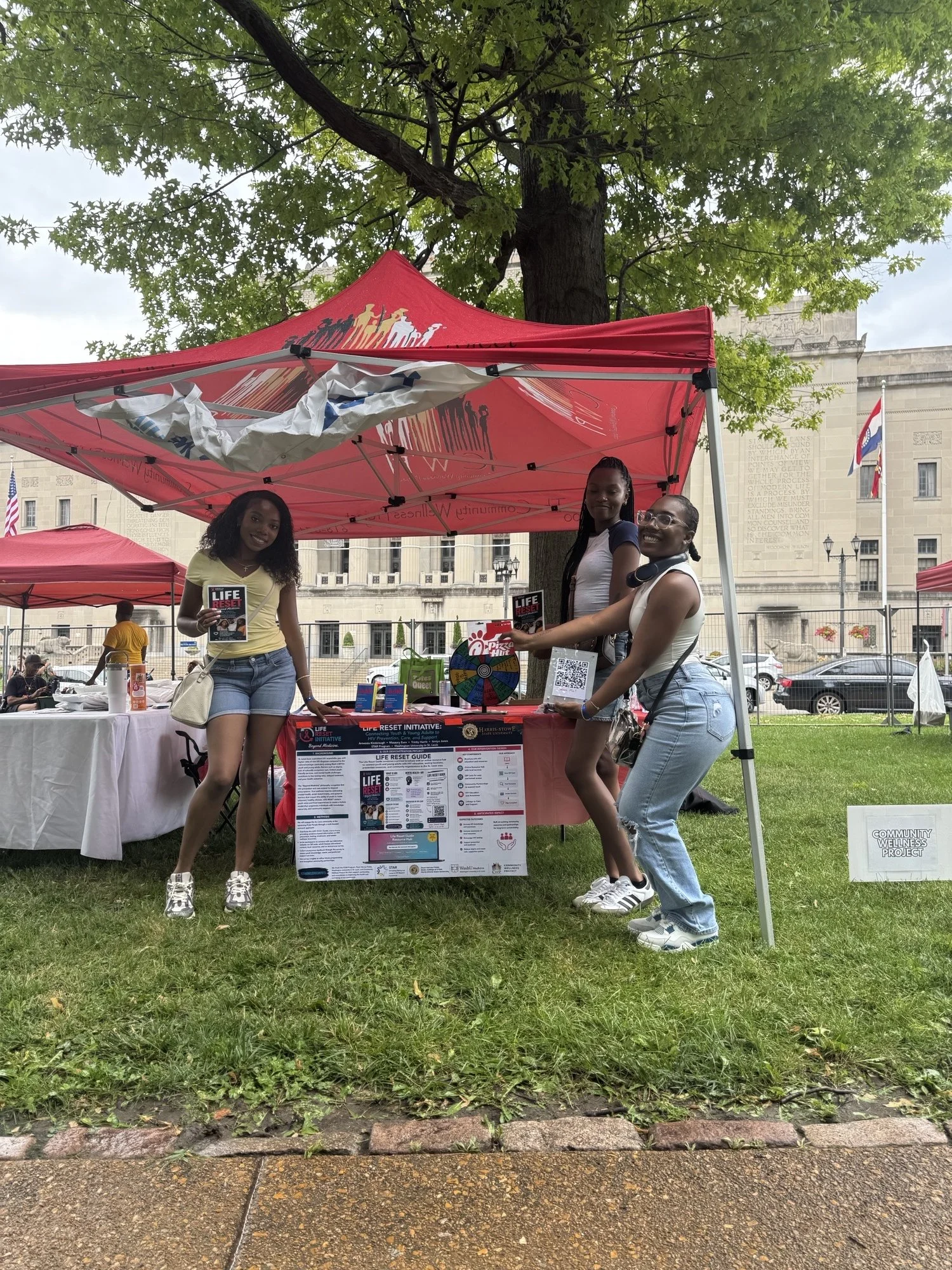
Arnezsia and fellow interns tabling for the Life Reset Initiative.
Personally, the biggest thing I took away from this experience was realizing how much of a community is out there that many people do not know about. Before this internship, I was not aware of many of the organizations and resources that I eventually had the opportunity to learn about and visit. The experience also helped me become more comfortable talking about HIV and sexual health and showed me how important it is to have those conversations without judgment. HIV still carries stigma and misconceptions, which can prevent people from asking questions or seeking the services they need. I learned that having accurate information is important, but how that information is communicated matters too. People need to feel comfortable, respected, and supported when seeking information or care. Working alongside people already doing this work in the St. Louis community made that lesson more meaningful than learning about it only in a classroom.
This experience also came during an important transition in my life. I graduated from Harris-Stowe State University in May 2026, and I am now pursuing my Master of Science in Forensic Sciences while working as a Molecular Technologist in a molecular infectious disease laboratory. Although my education and career interests span different areas of science, my experiences through STAR, CWP, and the Life Reset Initiative gave me a perspective I could not have gained from the classroom or laboratory alone.
I entered the internship wanting to learn more about HIV and gain professional experience, but I left with a greater appreciation for community health and the people working to make healthcare and resources accessible. Most importantly, I now know there is a much larger community of support available than I ever realized. I am grateful that this experience allowed me to discover that community and contribute to a project designed to help other young people discover it too.