
October 28, 2026
The NIH Office of AIDS Research has released the FY 2026–2030 NIH Strategic Plan for HIV and HIV-Related Research, which sets NIH's HIV research priorities for the next five years. The plan outlines “a strategic, coordinated, cross-disciplinary research program to expand the reach of effective interventions and drive new innovations to eliminate HIV as a public health threat.”
Where things stand
NIH-funded research has helped increase life expectancy for people with HIV from just a few years after diagnosis to a nearly normal average lifespan. HIV testing and interventions have led to a more than 90 percent decrease in the number of U.S. children with perinatally acquired HIV. In June 2025, the FDA approved lenacapavir, a twice-yearly injection that clinical trials showed was nearly 100 percent effective at preventing HIV.
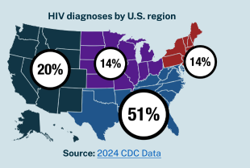
Figure 1. HIV diagnoses by U.S. region (2024 CDC data). Source: NIH HIV Strategic Plan for HIV and HIV-Related Research p.1
Still, more than one million Americans have HIV, and nearly 39,000 were newly diagnosed in 2024. The burden is uneven across the country: about half of new diagnoses occurred in the South, while each of the other regions accounted for 14 to 20 percent of HIV diagnoses (Figure 1). According to 2024 CDC data cited in the plan, about 1 in 5 new cases occurred in adolescents and young adults, and about 1 in 4 Americans with HIV were women. Black and Hispanic or Latino people and men who have sex with men are disproportionately affected, and more than half of people with HIV in the U.S. are aged 50 or older.
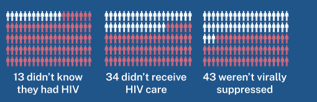
Figure 2. For every 100 Americans living with HIV (2022 CDC data). Source: NIH HIV Strategic Plan for HIV and HIV-Related Research p.1
Gaps also remain between diagnosis and successful treatment. For every 100 Americans living with HIV, 13 did not know they had HIV, 34 did not receive HIV care and 43 were not virally suppressed (Figure 2). The plan describes viral suppression as “essential for preventing transmission and supporting longer, healthier lives,” and notes that NIH-funded research showed that achieving and maintaining viral suppression to an undetectable level prevented HIV transmission to sexual partners.
In plain terms: the tools work, but not everyone is getting them.
The big shift: implementation science
The plan makes implementation science NIH's overarching priority for HIV research. It defines this as “the study of methods to promote the adoption and integration of evidence-based practices and interventions into routine health care and public health settings.”
The plan cites a 17-year gap between new scientific discoveries and their application in practice. Efficacy research determines whether an intervention works. Implementation science focuses on how to deliver proven interventions, and it measures outcomes such as reach, access, uptake, cost and sustainability. The plan describes an “implementation science lens” that can be applied at various stages of the research-to-practice continuum and that “anticipates who will use an intervention, where, how, and under what conditions, beginning in early stages of intervention development.” The plan notes that some populations are disproportionately affected by new infections and have lower rates of viral suppression, and that these data “highlight gaps in reach, uptake, access, and persistent use of effective interventions.”
In plain terms: traditional research asks “Does this work?” Implementation science asks “How do we get it to the people who need it, and keep it there?”
How the plan is organized
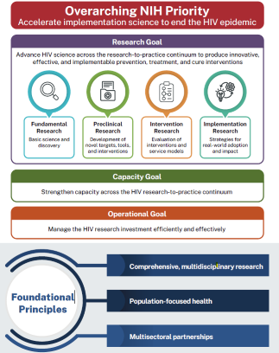
Figure 3. The plan’s framework. Source: NIH HIV Strategic Plan for HIV and HIV-Related Research p.9
Figure 3 shows the plan’s structure: one overarching priority, three strategic goals and three foundational principles.
Research goal: advance science across four stages, from fundamental discovery to real-world implementation (the four circles in Figure 3). Priorities include HIV reservoirs and cure strategies, vaccines, conditions that occur alongside HIV as people age, and person-centered and community-led models of care.
Capacity goal: strengthen the research workforce through training and mentorship, expand research networks and data systems, and develop new methods, including ethical use of artificial intelligence.
Operational goal: manage the HIV research investment efficiently and effectively. Every NIH grant, contract and intramural project funded with HIV/AIDS dollars is mapped to a plan objective and reported on the public NIH OAR Data Hub.
Foundational principles: comprehensive, multidisciplinary research; population-focused health; and multisectoral partnerships, including community engagement at every stage of research.
What it means
For researchers, the plan encourages measuring implementation outcomes in clinical trials and using hybrid designs that evaluate both effectiveness and implementation. Fundamental and preclinical research remain part of the portfolio, and the plan calls for designing and evaluating new products “with explicit consideration of feasibility, acceptability, cost, and scalability in real-world settings.”
For communities, the plan calls for engaging people with and affected by HIV in the design, conduct and dissemination of implementation research. It supports community-led interventions, care that combines HIV services with behavioral health and primary care, and research on communicating findings through strategies that are “culturally congruent, contextually relevant, and community driven.” Community input also shaped the plan: more than 200 respondents answered NIH's public request for information, and the three task forces of 45 experts included people with lived experience.
Looking ahead
The plan runs through 2030, the same year the federal Ending the HIV Epidemic initiative aims to reduce new infections by at least 90 percent. Each year, OAR updates portfolio data on the NIH OAR Data Hub and reviews the plan to assess progress.
Reference: National Institutes of Health, Office of AIDS Research. FY 2026–2030 NIH Strategic Plan for HIV and HIV-Related Research. Available online.
Written by Jacaranda van Rheenen.