
Radhika Sundararajan joins WashU and Midwest D-CFAR
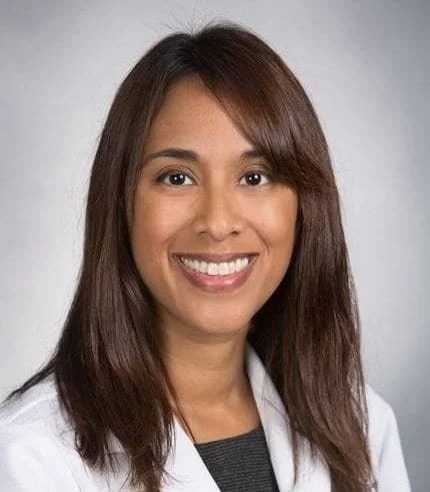
Radhika Sundararajan, MD, PhD
September 29, 2026
The Midwest D-CFAR is excited to welcome Radhika Sundararajan, MD, PhD, to our team!
Dr. Sundarajan recently joined the Department of Emergency Medicine as an Associate Professor. She will also be joining the Midwest D-CFAR Developmental Core as a Co-Director.
As an emergency physician and anthropologist, Dr. Sundararajan brings a unique perspective to HIV research, focusing on building trust with communities and improving access to care. Her research explores how social and cultural factors shape people’s experiences with HIV and the challenges they face in accessing services.
We are thrilled to have Dr. Sundararajan join the Midwest D-CFAR and look forward to the experience and perspective she brings to our community. We sat down with Dr. Sundararajan to learn more about her background, research interests, and plans as a new St. Louisan!
You’ve trained as both an anthropologist and an emergency physician, two fields that aren’t often thought of together. What first drew you to combine them, and how does that dual lens shape the questions you ask in your research?
Dr. Sundararajan: These two fields seem distinct, but I would argue that the practice of Emergency Medicine is deeply anthropological. I trained in anthropology before medical school, and what drew me to medicine in the first place was realizing that health is both objective — people have symptoms that are real, and that cause suffering, morbidity, and mortality — and subjective, since people develop their own explanations for those symptoms and their own beliefs about how they should be treated. Anthropologists are trained to build explanations for what they observe, often drawing from cultural traditions or social context. That's not so different from what happens in the Emergency Department (ED), where we build an explanation for a patient's presentation through their history, a physical exam, and testing.
Some ED patients are very sick, and you don't get much time to talk with them. But for most patients, a social science lens is invaluable: How do they understand their symptoms? What led them to the ED that day instead of a primary care doctor? What are they hoping the visit will accomplish? Like anthropologists, ED providers need to build rapport quickly to surface these things. Without that, it's hard to build a treatment plan that aligns with a patient's values and priorities and actually addresses what brought them in. Our research is founded on that same idea: meet people where they are, first and foremost.
Your research has shown that trusted community figures can dramatically improve HIV testing uptake in places where formal access to healthcare is limited. Do you see similar opportunities here, where trust in the healthcare system is often just as much of a barrier as access itself?
Dr. Sundararajan: Absolutely. Trust in healthcare systems and providers can be just as much of a barrier to care as access itself, and I think we can approach that challenge in St. Louis and Missouri the same way we have elsewhere, starting with a deep understanding of local context before jumping to solutions. In rural Uganda, for example, we found that many people prefer to see traditional healers — traditional midwives, spiritual leaders, herbalists — rather than go to formal healthcare facilities. That preference is partly about access, since healers are present in every community, but it's also because they are deeply respected and trusted, and their practices do not carry the same stigma attached to clinics, particularly the ones that deliver HIV services. Our work starts from that same premise: meet people where they are, then design programs together that reflect their preferences and build on the strengths already present in the community.
In joining WashU and the Midwest D-CFAR, what are you most looking forward to accomplishing?
Dr. Sundararajan: I'm looking forward to getting to know the community partners across St. Louis and Missouri more broadly, and to learning about the work of the region's early-career HIV investigators. One of my favorite things is to serve as a mentor for others, so I'm really excited by the kind of capacity-building the Midwest D-CFAR supports — pilot funding to help junior investigators reach their first R01, structured mentoring, and venues like the HIV Works-in-Progress Seminar where emerging researchers get feedback on their projects. I'd love to help continue that work of turning strong ideas into fundable, community-grounded research.
A lot of your research has focused on low-resource settings abroad. As you settle into working in St. Louis and the Midwest, what draws your attention to this part of the country? Do you see any parallels between the challenges you’ve studied globally and what’s happening closer to home?
Dr. Sundararajan: Much of the rural Midwest faces challenges that closely echo what we've seen in the global communities we work with — transportation barriers, food and employment insecurity, HIV-related stigma, and limited access to mobile phones and reliable connectivity. When I look at HIV outcomes in Missouri, or hear colleagues describe how far some patients travel for care, it's strikingly familiar to conversations I've had in rural Uganda or Tanzania. The specifics differ, but the underlying dynamic — people navigating illness in places where the health system wasn't built with their circumstances in mind — is the same.
That's part of what draws me to this work. Implementation science asks how we adapt what we know works to the realities of a given setting, and that question doesn't change much whether the setting is a village in southwestern Uganda or a rural county in Missouri. I'm especially interested in whether some of the task-shifting and community-partnership models we've developed abroad — leaning on trusted local figures rather than assuming everyone will come through a clinic door — could be adapted here. I don't think we can import a model wholesale; it has to be grounded in what Missouri communities actually want and need. But I do think the methods we've honed for listening first and building from there travel well, and I'm excited to get to work.
On a lighter note, how do you like to spend your downtime outside of work?
Dr. Sundararajan: Outside of work, I try to spend time outdoors. In New York City, that meant making the most of our urban parks whenever the weather allowed: Central Park, Prospect Park, long walks that had nothing to do with getting anywhere in particular. I've always lived within walking distance of some of the biggest parks in the boroughs, so green space has been a constant thread through the different chapters of my life, personally and professionally. I'm really looking forward to discovering what that looks like in St. Louis, and Forest Park is at the top of my list. I've heard wonderful things about it, and I'm excited to explore it.
By Tessa Gauzy.