
Get to know new WashU faculty member, Dr. Whitney Irie
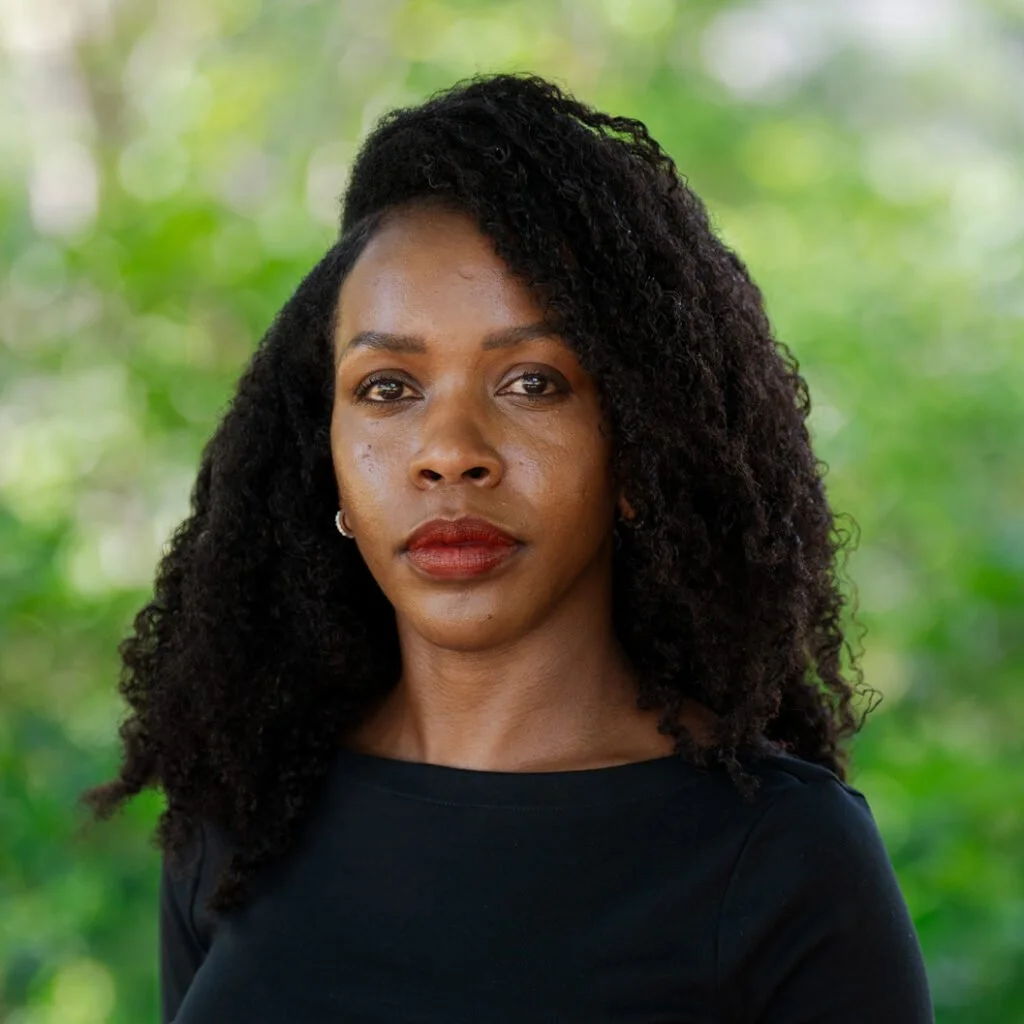
Whitney Irie, PhD
August 25, 2026
Please join us in welcoming Whitney C. Irie, PhD, to WashU!
Dr. Irie recently joined the Bursky School of Public Health as an Associate Professor. She is an implementation scientist whose research advances equitable sexual and reproductive health care, with a primary focus on Black women’s access to HIV prevention and other women’s health services.
We sat down with Dr. Irie to learn more about her journey to implementation science, her ongoing work, moving back to St. Louis, and more!
Can you tell us a little about your journey into implementation science?
Dr. Irie: My journey into implementation science has increasingly been shaped by a question: What would it take to build systems of care that are truly accountable and responsive to Black women's health, lives, and futures?
I was trained as a social worker and social and behavioral scientist, so I came to implementation science already thinking about people in the context of systems and about the responsibility those systems have to the people they serve. My work in HIV prevention made the limitations of our current systems particularly visible to me. PrEP is remarkably effective, yet Black women remain underrepresented among those who benefit from it. I don't see that simply as an individual-level disparity or a problem of awareness, uptake, or demand, and Black women do not experience it that way; the reality of it is that it is also a systems-of-care problem.
Implementation science gives me a way to interrogate what happens between having an effective intervention and ensuring that people can actually benefit from it but my work pushes further to ask what systems themselves must do differently. How do we make care more accessible, trustworthy, responsive, and relevant to Black women's lives? And how do we hold systems accountable when they fail to do so?
Increasingly, I think about these questions through the lens of Black women's health and futurity. I'm interested not only in closing the gaps we see today, but in anticipating and building the systems of care Black women will need to thrive in the future. Because when Black women are healthy, their families and communities are healthier, too.
What are you most excited to explore, build, or collaborate on at WashU?
Dr. Irie: I'm most excited about the opportunity to build toward the health systems we are going to need next. The health and care needs of our communities are rapidly outgrowing many of the antiquated systems we've relied on to meet them. I'm inspired by Octavia Butler's insistence on taking change seriously not simply as something that happens to us, but as something we must learn to anticipate, adapt to, and shape. That resonates deeply with how I think about implementation science. Our research has to do more than respond to today's problems; it needs the foresight and agility to helpbuild systems capable of meeting the needs of communities now and into the future.
WashU is an exciting place to do that because there is tremendous expertise across implementation science, public health, medicine, social science, data science, and community-engaged research. I'm particularly interested in collaborations that rethink how we measure and strengthen organizational accountability, design systems around the realities of women's lives, and thoughtfully harness emerging technologies including AI to improve communication, access, and care.
And I'm excited to do that work here in St. Louis. I want to work shoulder to shoulder with communities, clinicians, public health professionals, students, and researchers not simply studying existing systems, but imagining, building, testing, and refining what better systems of care can look like.
What projects do you currently have ongoing?
Dr. Irie: The projects underway in the Irie Research Collective are different expressions of the same larger question: How do we build systems of care that are accountable, responsive, and capable of evolving alongside the people they serve?
For example, through the HEART Study, we are developing a tool to help organizations assess and strengthen their capacity to deliver health services equitably. LinkHER focuses on improving pathways to PrEP for women receiving care in OB/GYN settings, while PillowTalk explores how AI might support women in communicating with partners about HIV prevention and PrEP. We also have ongoing work focused on provider education, implementation and sustainment, and strengthening organizational capacity to translate evidence into routine care.
I call our group the Irie Research Collective very intentionally. The challenges we're addressing cannot be solved by one discipline or by researchers alone. The Collective brings together researchers, trainees, community partners, clinicians, and public health practitioners to think critically about what works, who benefits, who is being missed, and what systems need to do differently.
At its core, our work is about accountability and possibility. We want to close the distance between what evidence tells us is possible and what people actually experience when they seek care, while also looking forward. We're interested not only in fixing gaps in today's systems, but in helping create the conditions for healthier futures particularly for Black women and the families and communities that thrive alongside them.
Finally, is there anything you’re looking forward to doing here in St. Louis?
Dr. Irie: St. Louis is actually a return for me. I lived here during my doctoral training, but I was at a very different stage of my life then. Coming back now, I feel like I have a more mature lens and a much deeper curiosity about the region its communities, its history, and the people and places that I didn't fully know the first time around.
I'm especially excited about building deeper connections throughout St. Louis and beyond the city itself. The Collective has collaborations that will allow us to spend time in Missouri's Bootheel, and that has made me want to better understand the tremendous diversity of communities across this region, their histories, strengths, challenges, and visions for their own futures.
So this time, I want to experience St. Louis and Missouri less as a place I'm simply living and working in and more as a place I'm becoming connected to. I'm looking forward to listening, learning, showing up, and discovering parts of the region that I missed the first time around.
Edited by Kate Gershwin