
November 17, 2026
What can hospitals do to bring preventive care to people who have trouble accessing it elsewhere? At a panel at WashU Medicine on October 27, 2026, clinicians offered three answers:
Start with the people patients already trust
Share the work across the care team, and
Use the hospital visit to connect patients with support beyond medicine.
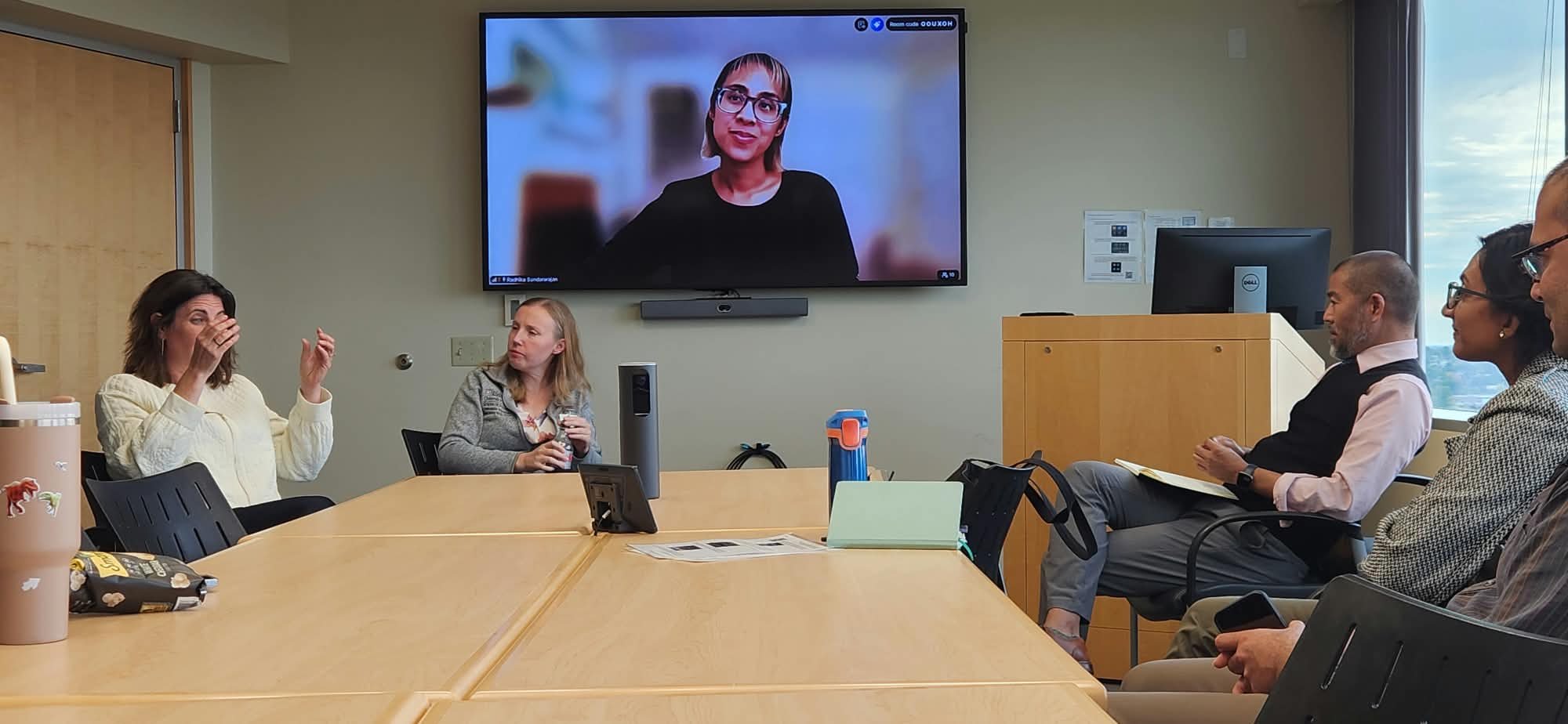
From left to right: Alysse Wurcel, Laura Marks, Radhika Sundararajan, Elvin Geng, and Aditi Ramakrishnan.
The discussion, hosted by the Midwest D-CFAR, featured visiting speaker Dr. Alysse Wurcel, associate professor of general internal medicine and infectious diseases at Boston University’s Chobanian & Avedisian School of Medicine.
Dr. Wurcel was joined by Dr. Laura Marks, assistant professor of medicine in the Division of Infectious Diseases at WashU, and Dr. Radhika Sundararajan, associate professor of emergency medicine at WashU and co-director of the Midwest D-CFAR Developmental Core. Dr. Elvin Geng, the Virginia Minnich Distinguished Professor of Medicine at WashU and director of the Midwest D-CFAR, moderated.
Start with the people patients trust
Dr. Marks used the phrase “trusted silos” to describe where people already turn for health information. That might be a physician, a local health department, or a friend or family member whose firsthand experience helps someone decide what to do. Shared backgrounds and lived experiences can also help build trust.
For hospitals, that raises a practical question about who is best placed to start a conversation about prevention. The panel pointed to nurses, whose work across teams and settings can help them share information and connect patients with resources.
Share the work of prevention
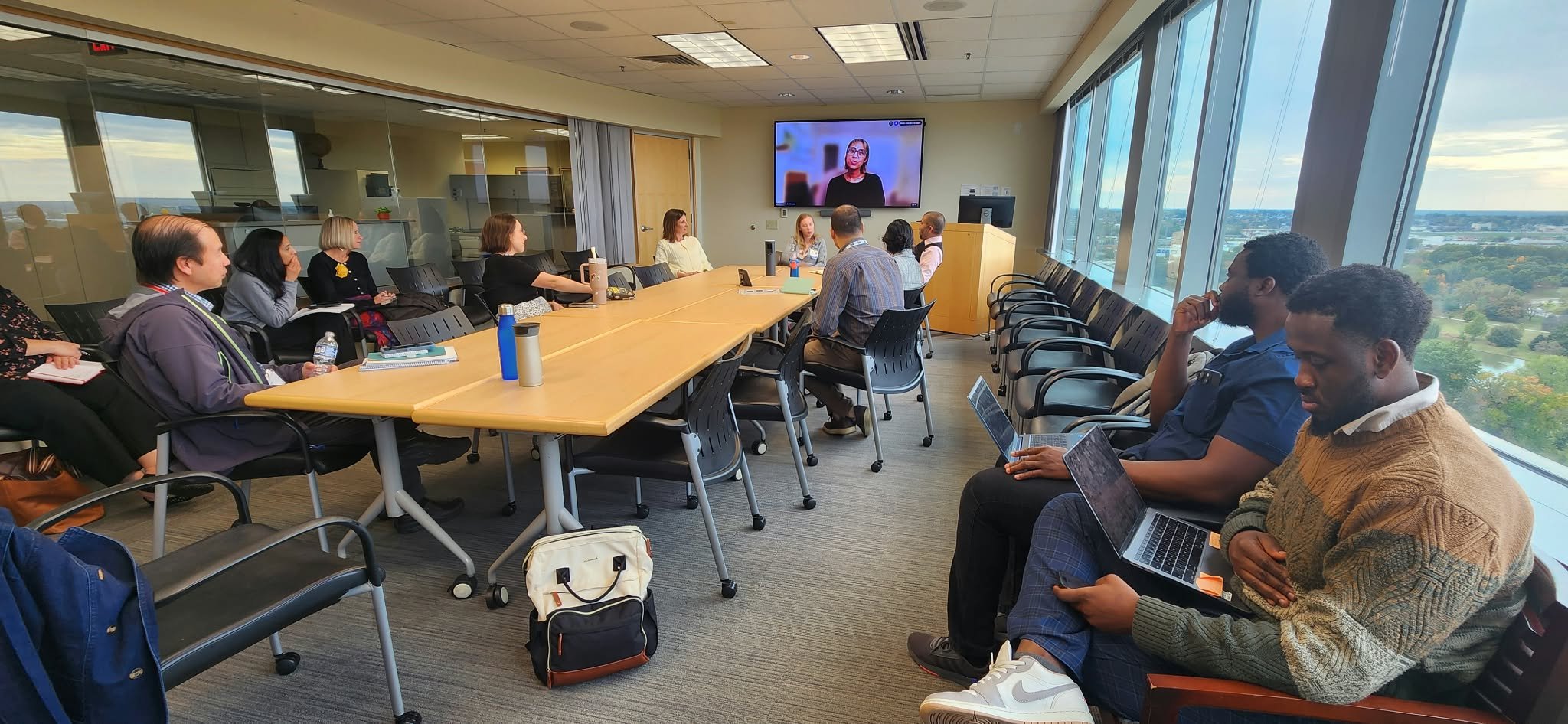
Faculty and staff listen in on the panel discussion.
Dr. Sundararajan said physicians have to accept that they can’t be everything to their patients. The panel discussed task shifting, the practice of redistributing responsibilities across a team, as a way to reach more patients by drawing on the skills of nurses, paramedics, and other professionals.
What can be shared depends on how work is organized locally. Dr. Wurcel pointed to blood draws as an example of how nursing union agreements can shape which team members perform a procedure.
Connect patients with support beyond medicine
In harm reduction work, patients may have legal needs alongside their health needs. Dr. Wurcel discussed how paramedics could help connect patients with legal support, giving the panel an example of how a care team can help patients reach services outside the hospital.
A new direction for public health
For people who struggle to access preventive care, a hospital visit can be a place to start. The panel pointed to a direction for public health that starts with encounters patients are already having. Hospitals can offer preventive services during the visit and connect patients with people and services they can turn to after discharge.
Written by Jacaranda van Rheenen