
Get to know Brittney van de Water, Visiting HIV Transdisciplinary Grand Rounds Speaker
March 23, 2026
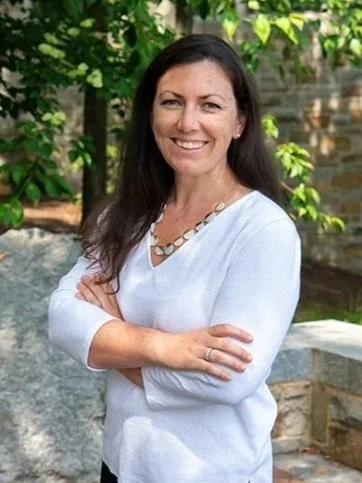
Brittney van de Water, PhD., RN, CPNP, FAAN
The Midwest D-CFAR community is pleased to welcome Dr. Brittney van de Water, PhD, RN, CPNP, FAAN, an Associate Professor at Boston College's Connell School of Nursing and a leader in global TB and TB/HIV implementation research. Dr. van de Water will visit St. Louis in April for a series of events, including presenting at the Midwest Mycobacteria Meeting on April 16 and delivering HIV Transdisciplinary Grand Rounds on April 17, where she will discuss strategies for “empowering the frontline” through nursing leadership and implementation science.
Her work focuses on improving TB and TB/HIV care in low-resource settings, particularly in sub-Saharan Africa, by strengthening health systems, leveraging routine data, and elevating the role of nurses and community-based providers. Through her research and partnerships, she advances practical, scalable approaches that improve care for populations most affected by TB and HIV.
Ahead of her visit to St. Louis, we invited Dr. van de Water to reflect on her work, her motivations, and the future of TB/HIV research.
Before you arrive in St. Louis, can you share what excites you most about speaking with the DCFAR community?
Dr. van de Water: I am really looking forward to meeting the faculty and students in St. Louis. Although I would consider myself a relatively avid traveler, I have never been to St. Louis! I was part of the Johns Hopkins CFAR Implementation Science Fellowship a few years ago, and it was such a vibrant community of scholars. I look forward to learning from the D-CFAR what pressing issues you are all working on, and sharing my experiences to see where synergies lie.
Your work focuses on improving TB and HIV care in low-resource settings. What first drew you to this area of research?
Dr. van de Water: I now teach at Boston College (BC) Connell School of Nursing, but I was also an undergraduate at BC. As a Jesuit institution, their motto of “men and women for and with others” has always been very meaningful to me. The concept of social justice was woven into nearly all of my undergraduate courses, and I think this naturally led me towards wanting to improve health equity. I have always understood TB to be a socially determined disease on a macro-level. Intertwined with this underlying desire to improve health for the common good, I am also motivated to do research where the impact will yield the most reward. Colleagues in South Africa say “where you live should not determine whether you live” and I think ensuring resources and strategies are available in low-resource settings is critical to ending the TB epidemic given a cure, diagnostics, and preventive measures are all available; just not necessarily where they are most needed.
TB and HIV care often overlap. Why do you feel it is important to address them together rather than separately?
Dr. van de Water: I think HIV and TB are a classic syndemic – they interact synergistically and accelerate the other’s progression. Globally, and I think especially in South Africa, HIV often has the main stage – in research, funding, clinical attention; yet, TB is the leading cause of death for people living with HIV in most low- and middle-income countries. Just today, Professor Kogie Naidoo – a well-known TB expert in South Africa wrote a fantastic comment titled “After centuries, TB is still the bridesmaid, never the bride” which I couldn’t agree more with.
You’ve worked across several countries in sub-Saharan Africa. What lessons from those settings can be applied to HIV care in the U.S.?
Dr. van de Water: Although not perfect, community healthcare workers and the use of lay counselors is impressive in some of the countries I’ve worked in. I still work per diem as a pediatric nurse practitioner at a rehabilitation hospital in Boston, and used to work in primary care and I don’t think the U.S. healthcare system systematically employs community health workers or lay counselors as well as some other countries. I think there are some great examples like in behavioral health and HIV care; though to my knowledge, this often does not encompass entire states and often is not part of routine care. Conversely, CHWs and lay counselors are integral to the health system in South Africa, and are critical for continuity of patient care.
Nursing plays a major role in your research. How can nurses be better supported as leaders in health systems?
Dr. van de Water: I love this question! In many scenarios I think nurses just need a seat at the table. Our SAIA-TB study really emphasizes ownership of data and empowerment of clinic staff. I think this helps “democratize” data. Nurses are often the ones capturing data, seeing patients and managing clinics – but if nurses have access to the data they generate, and are given training and tools on how to analyze it; I think nurses can be incredibly well-equipped to lead health systems.
Your talk focuses on “empowering the frontline.” What does that look like in practice for nurses and care teams?
Dr. van de Water: To empower the frontline I think it is about sharing knowledge. Bringing back data to clinics to say “this is yours – does it look correct? Does this make sense? How do you want to move forward?” Clinic staff actually hold the answers – I think of myself and our study team as just facilitating clinic staff through a process – and documenting it – so they are empowered to be data-driven in making their decisions and coming up with solutions. Helping clinic staff realize they are the ones that know their clinics’ bottlenecks, and they are the ones that can brainstorm potential micro-interventions is quite powerful. I think that empowerment may be more enduring than any micro-intervention trialed.
What advice would you give to students or early-career researchers interested in TB/HIV and implementation science?
Dr. van de Water: I think given the current funding situation it may be daunting to dive into TB/HIV research, but unfortunately, that doesn’t make TB nor HIV go away. If anything, I am concerned these diseases will only worsen in the coming years globally and locally, as we all know our world is incredibly interconnected and TB is an airborne infectious disease. I think implementation science is a growing field right now which is exciting, and I find IS methods very pragmatic which lends itself well to global health. Most importantly, find something that you can see yourself devoting your career to for the next decade and that will bring you satisfaction.
Outside of your research, what keeps you motivated and grounded in this work?
Dr. van de Water: The people I work with keep me grounded, and the patient populations I strive to support motivate me. Last year my NIH grant was paused for six months, and I had to let go of five full-time research staff in South Africa. I was devastated, the study was paused, but more concerned for my team. They are all back working now and their resilience, tenacity, and grit have been remarkable. Patients ground me in another sense; I recently co-authored a qualitative paper with colleagues about caregiver experiences administering drug-resistant TB medications to children. The excerpts are heartbreaking and I still get emotional when watching a short film about a 12-year old girl’s journey though DR-TB treatment. We must do better.
Edited by Tessa Gauzy.