
Persistence and Adaptivity: Lindsey Filiatreau Reflects on CFAR Meeting
March 19, 2026
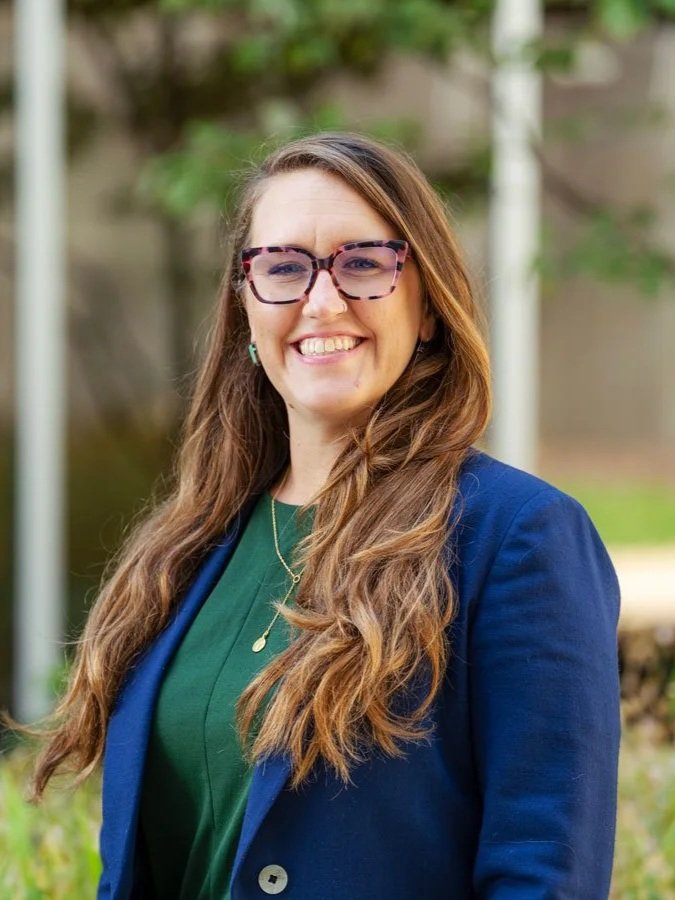
Lindsey Filiatreau, PHD, MPH
At the 29th Annual National CFAR Meeting, Dr. Lindsey Filiatreau, Midwest D-CFAR member and Assistant Professor at the WashU School of Public Health, joined researchers, community partners, and NIH leadership from across the country to discuss the future of HIV research and the path toward ending the epidemic. The meeting highlighted a field in transition, marked by growing emphasis on implementation science, emerging technologies, and the need to adapt within an increasingly complex funding environment.
Through sessions focused on community engagement, interdisciplinary collaboration, and evolving NIH priorities, Lindsey gained insights directly relevant to her work at the intersection of HIV care, mental health, and health disparities.
What were the most important themes or priorities that emerged at the CFAR meeting this year, particularly regarding the future direction of HIV research and implementation science?
Dr. Filiatreau: Based on discussions at the CFAR meeting, there seems to be increasing attention on accelerating the HIV research-to-practice pipeline through the application of Implementation Science concepts and novel technologies, particularly AI. While enthusiasm for these priorities was mixed, all participants acknowledged the importance of incorporating both emerging technologies and Implementation Science into our work as we aim to end the epidemic. As expected, another recurrent theme that came up across nearly every panel was the importance of persistence and adaptivity in the current funding landscape. While it feels particularly difficult to engage in HIV research right now, it was consistently reiterated that it is perhaps more important now than it ever has been.
Were there any sessions or conversations that particularly resonated with your own work on HIV care, mental health, and health disparities? What stood out to you the most?
Dr. Filiatreau: Aside from the early-stage investigator (ESI) session with the NIH, which provided an exceptional opportunity to gain insight into the current functioning and priorities of numerous institutes, I deeply appreciated the interactive session on working with community partners. During this session, ESIs were presented with distinct scenarios and asked how they could better address the challenges they were facing through collaboration with community partners. Community members were dispersed throughout the room and provided incredibly useful perspectives on what has and hasn’t worked well in their experience working with researchers. In particular, we discussed best practices for building new partnerships amid unstable funding and shifting research priorities. This is particularly pertinent to my own work which has shifted from rural South Africa to Missouri.
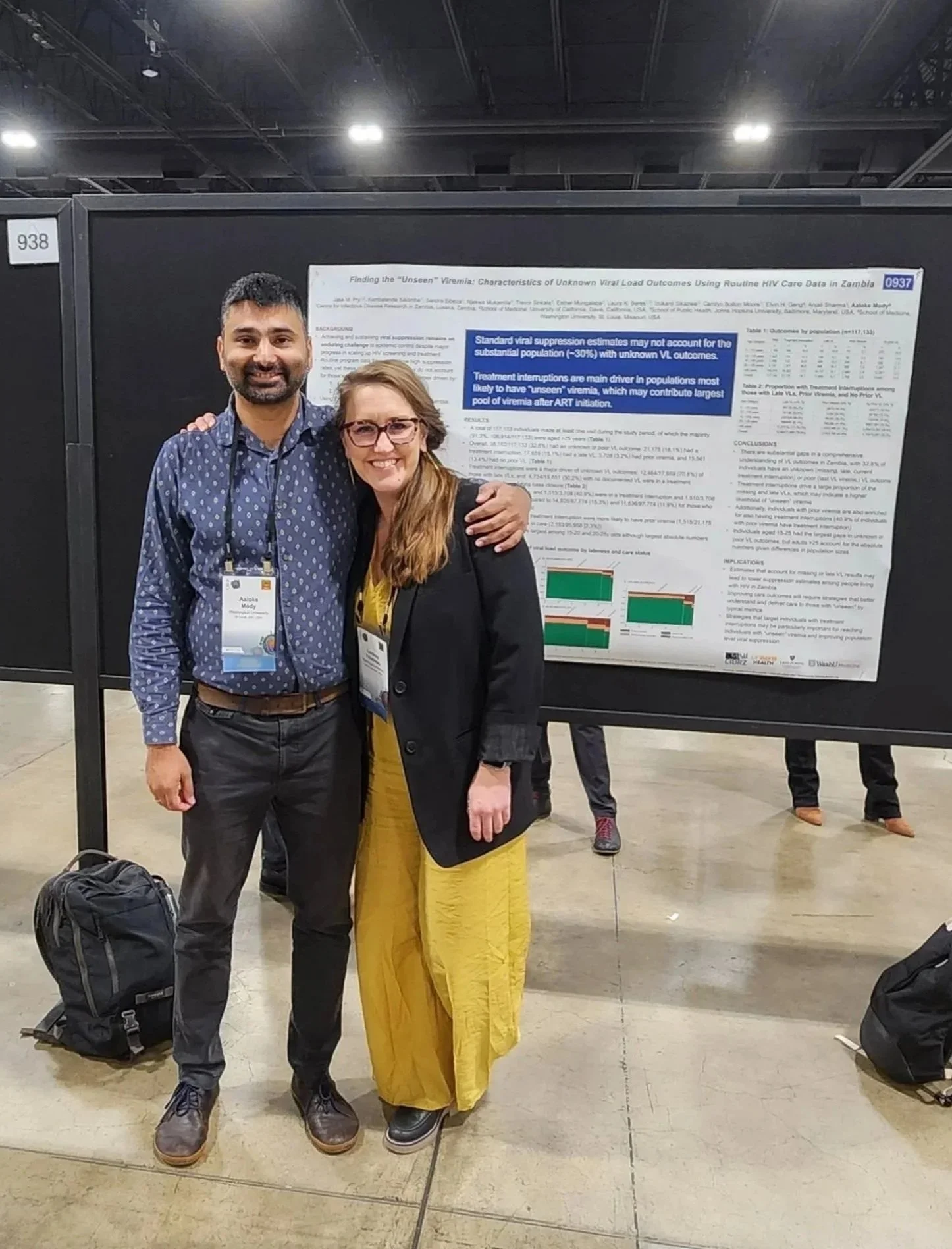
Lindsey Filiatreau, PhD, MPH (right) and Aaloke Mody, MD (left) at her CROI poster
The meeting included discussions with NIH leadership about upcoming HIV research priorities. How do you think those priorities might influence the types of studies or collaborations researchers pursue over the next few years?
Dr. Filiatreau: This meeting focused heavily on promoting the incorporation of Implementation Science concepts and community-engaged research approaches into NIH proposals. While there is some hesitation among individuals with limited exposure to Implementation Science to engage in this type of work, I think we will see more and more basic scientists and interventionists seeking collaborators with expertise in IS to round out their research teams.
CFAR meetings are also known for networking across institutions. Did you come away with any new collaborations or ideas that could shape your research moving forward?
Dr. Filiatreau: I was grateful to connect with a number of NIH program officers at this meeting and further flesh out existing ideas about approaches for integrating HIV and behavioral health services in Missouri. While I didn’t develop any new collaborations, I was certainly excited to connect with prior colleagues and researchers whose work I have long admired. It was also a nice opportunity to connect with some of our own D-CFAR members, including Dr. Mintesnot Teni!
Edited by Tessa Gauzy.