
November 19, 2026
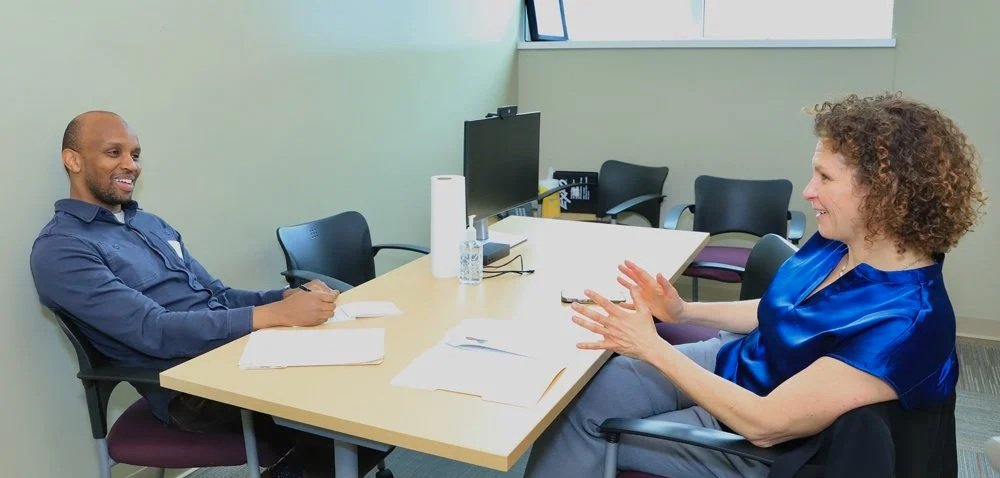
Enbal Shacham (right) discusses an HIV research proposal with WashU postdoctoral researcher, Eric Thuo (left)
In addition to being Associate Director of the Midwest D-CFAR, Enbal Shacham, PhD is a Professor and Associate Dean for Research and Strategic Partnerships at Saint Louis University (SLU)’s College for Public Health and Social Justice.
Dr. Shacham has long mentored student researchers, and this year she put together an HIV research group for SLU students. We sat down with her to learn more about the group, the projects its members are pursuing, and her long-term goals for these emerging HIV researchers.
What motivated you to launch an HIV research group at SLU?
Dr. Shacham: I receive many emails from students who are eager to get involved in research, and over the years I have had the opportunity to mentor many of them on a wide range of projects. This year, I wanted to create a more focused opportunity by launching an HIV research group that would both expand HIV-related research at SLU and provide students with meaningful research training and mentorship. The response has been overwhelmingly positive. Students have enthusiastically embraced the opportunity, and it has been exciting to see their passion for contributing to HIV research and improving health outcomes.
What topics are the students exploring, and how did they arrive at them?
Dr. Shacham: We co-design research questions. Each student brings different experiences, perspectives, and areas of expertise, and those lived experiences often shape the questions they are most interested in exploring. Together, we have discussed some of the most pressing challenges facing populations at risk for and living with HIV in the Midwest, while also reflecting on prevention and education practices that were common 20 to 40 years ago but have received less attention in recent years.
From those conversations, the students identified two primary areas of focus: comprehensive sexuality education and its relationship to health outcomes, and the use of social media to increase awareness of pre-exposure prophylaxis (PrEP). Both projects examine how people learn about HIV risk and how they can be more effectively connected to HIV prevention resources and services. The goal is to better understand how education and communication strategies can support informed decision-making and improve access to prevention efforts.
Looking ahead, what are your long-term goals for the group?
Dr. Shacham: Research teams naturally evolve as students graduate and move on to new opportunities, so my long-term goal is to build a sustainable pipeline of student researchers who are equipped to think critically, ask meaningful questions, and contribute to evidence-based solutions. While specific research topics may change over time, the group's mission will remain focused on addressing issues that affect the health and well-being of communities, particularly those impacted by HIV.
By Kate Gershwin.