
SPOTLIGHT on Octavio Mesner
DECEMBER 16, 2025
The Midwest D-CFAR community is full of brilliant and inspiring people, and we want to introduce them to the world! For our December 2025 spotlight, we are featuring Octavio Mesner, PhD, early stage investigator at WashU and Midwest D-CFAR member. Many thanks to Dr. Mesner for taking the time to speak with us!
Could you briefly describe your career journey and research interests?
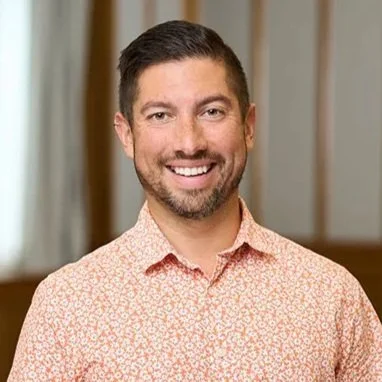
Octavio Mesner, PhD
Dr. Mesner: My journey into biostatistics and data science was driven by a desire to use my background in mathematics to combat the HIV epidemic’s disproportionate effect on the LGBTQ community. My career began as a biostatistician with the US Military HIV Natural History Study. The work was very meaningful for me, but it also helped me find areas for methodological development aimed at improving HIV/STI research. This inspired me to pursue a PhD.
At Carnegie Mellon University, I focused on developing nonparametric methods to estimate causal pathways using graphical models. I believe that data-driven diagrams of causal processes are essential for untangling the complex data structures inherent in HIV/STI epidemiology. These themes remain central to my work at WashU. I initially joined the university to collaborate with Jeremy Goldbach on research concerning racial and sexual minority youth, and I am currently working with [Midwest D-CFAR Director] Elvin Geng and his team to advance HIV care and prevention strategies in St. Louis. I’ve been really fortunate that my work has aligned with my values and interests.
What projects do you currently have ongoing?
Dr. Mesner: I’m currently working on several projects, but I want to highlight one in particular that is supported by the Midwest D-CFAR.
It’s well known that young, Black and Latino sexual-minority men are generally more likely to acquire HIV than other groups. As a gay Latino myself, I view these disparities with a mix of heavy-heartedness and professional resolve. I inhabit a space at the intersection of these statistics and the human stories they represent, allowing me to approach this research with a cultural intuition that data alone cannot provide.
With the support of the Midwest D-CFAR, I’m working to better understand the drivers of HIV incidence specifically within this population. This work is important because it helps us determine if there are unique factors predicting HIV seroconversion that we might otherwise miss. The challenge, however, is that standard methods struggle to find patterns when infections are infrequent. I’m using penalized regression to bridge that gap; it’s a modern statistical tool that lets us identify unique predictors even when the number of seroconversions is small. The work is ongoing, and I look forward to presenting the findings at the February HIV Works in Progress Seminar.

Dr. Octavio Mesner (right) and his husband at the 2025 Forest Park Balloon Glow.
Can you talk about your clinical data work with I2DB? What have you been doing and what have you learned?
Dr. Mesner: I’ve been working with Elvin Geng’s research group to better understand the WashU HIV Clinic population. We get raw, de-identified patient data from I2 in a large, secure database. There’s actually a lot of interesting details to the database itself, but in short, I2 has done a really good job of constructing it. I’m involved in several projects related to the HIV Clinic population. So far, we’ve looked at loss to follow up, reengagement, and HIV viral loads. We’re also looking at statin use. Our hope is that we can use this information to support both the clinic and health of people living with HIV.
How do you like living in St. Louis?
Dr. Mesner: My husband and I moved to St. Louis two and a half years ago. From the vibrant LGBTQ community to Great Rivers Greenway, St. Louis has become a place we’ve fallen in love with.
Edited by April Houston.